Quick answer: choose the system around route stability
Many buyers start the comparison by asking whether an AMR is "newer" than an AGV. That is the wrong framing. A well-designed AGV can run for years in a stable plant. A well-designed AMR can shorten deployment time in a changing warehouse. The real question is whether the vehicle has to follow a fixed guide path or make route decisions from onboard perception, mapping, and fleet software.
For PanPanTech warehouse projects, we treat AMR vs AGV as a site-design decision. The same payload can produce very different results depending on aisle width, pedestrian density, rack geometry, docking tolerance, charging windows, door or elevator control, and the maturity of the customer's warehouse management system. A robot that looks perfect in a video can disappoint if the quote does not include mapping, integration, safety validation, spare parts, and operator training.
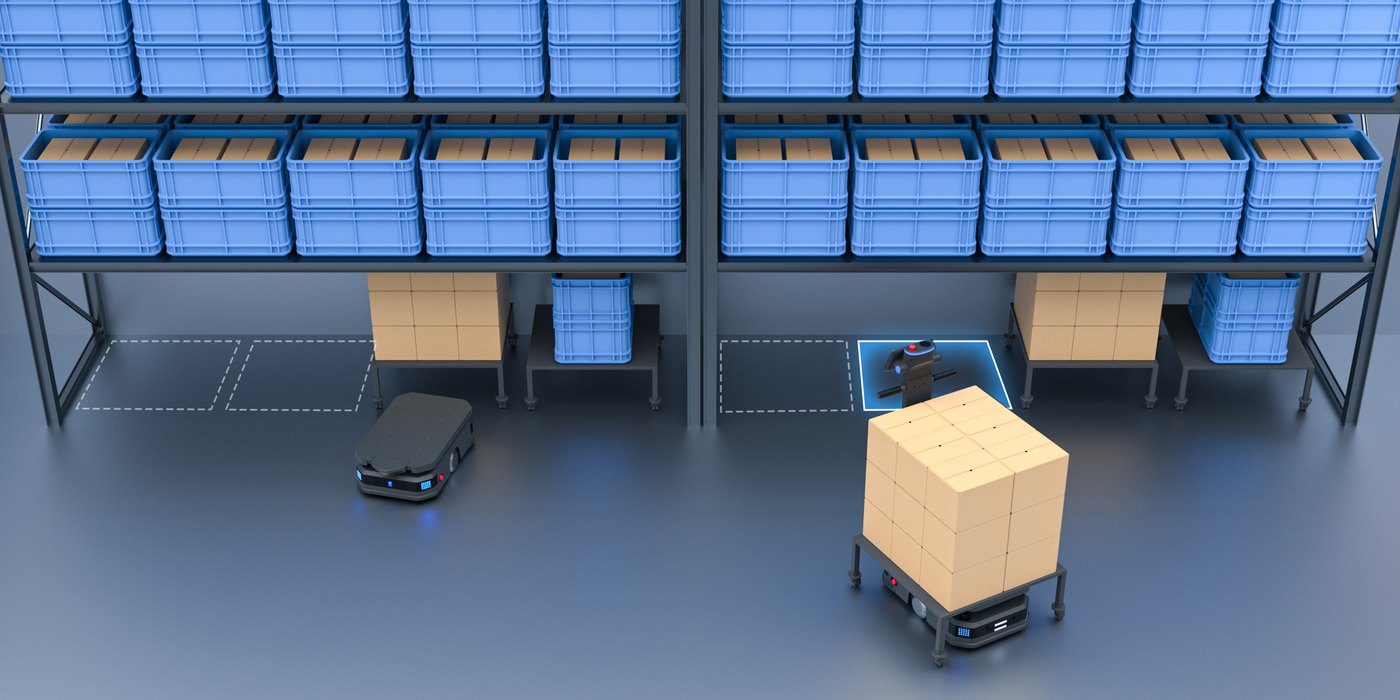
What is the difference between AMR and AGV?
An automated guided vehicle, or AGV, is normally built around a defined guide path. The path may use magnetic tape, embedded wire, QR codes, reflectors, transponders, or another guidance method. The advantage is repeatability: once the lane, pickup point, speed rule, and stop zone are engineered, the vehicle can perform a narrow transport job with predictable behavior.
An autonomous mobile robot, or AMR, localizes itself with onboard sensors and software, then plans around the mapped environment. The robot may use lidar, cameras, inertial sensors, wheel odometry, 2D maps, 3D perception, fleet rules, or a combination of technologies. In practice, this means the AMR can reroute around a temporary obstacle, accept different mission types, and adapt when a warehouse changes its storage or production layout.
The distinction is not perfectly clean in the market. Some modern AGVs have more advanced obstacle detection and fleet control than older systems, while some AMRs still need disciplined operating zones. Buyers should therefore compare the operating envelope, not just the product category. Ask how the vehicle localizes, what happens when the path is blocked, how maps are updated, what reflective or visual features are required, and who is responsible for validating the final route.
Cost and infrastructure: compare the full project, not the robot price
A low unit price can be misleading. The better comparison is total deployment cost across the expected life of the workflow. For AGVs, physical path design, guide installation, traffic segregation, and route engineering can be a meaningful part of the project. For AMRs, the cost often moves into mapping, software, fleet orchestration, integrations, and commissioning. Neither is automatically cheaper.
Start with the labor and motion problem. How many trips per shift should be automated? How much waiting time is created at conveyors, elevators, doors, or staging zones? How often do operators walk empty-handed or move carts that could be handled by a robot? Then compare the investment against measurable improvements: reduced manual travel, more consistent line-side replenishment, fewer forklift interactions in busy aisles, improved night-shift continuity, and better visibility of transport tasks.
Include the hidden items in the quote. A serious AMR or AGV budget should cover chargers, batteries, payload modules, racks or carts, docking hardware, map creation, fleet software, WMS or MES connection, network assessment, safety documentation, commissioning, training, spare parts, warranty, and remote or local service response. If these are missing, the first price is not the final project cost.
Which technology fits each warehouse workflow?
AMRs tend to perform well when transport tasks are varied: replenishment today, empty-container return later, finished-goods staging at night, and ad hoc delivery during peaks. AGVs tend to perform well when the route resembles a fixed conveyor on wheels: same start, same destination, same lane discipline, and a stable takt time.
Integration, docking, and payload questions buyers should not skip
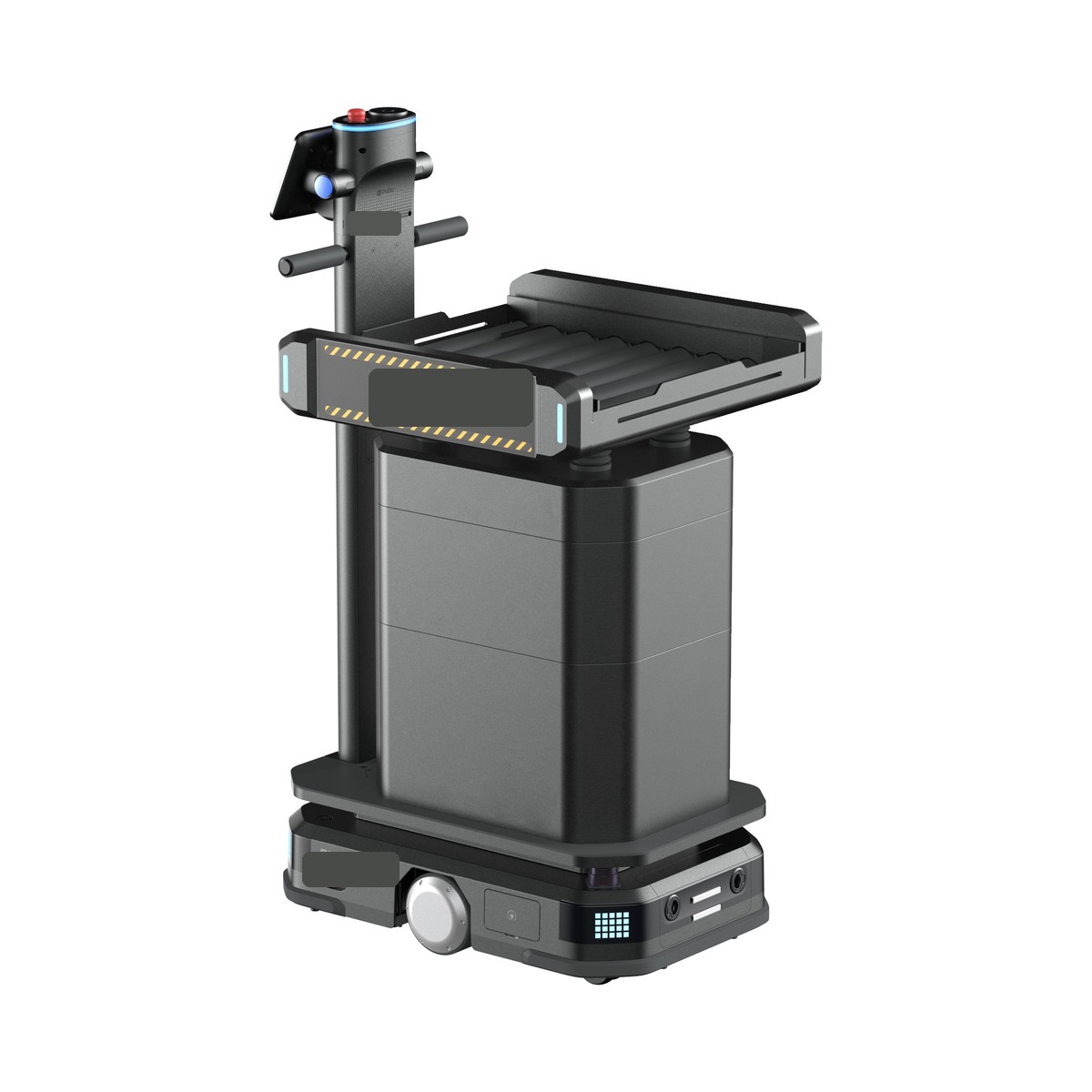
Payload is not only a maximum kilogram number. A 300 kg rating does not tell you whether the robot can safely carry a tall rack, a shifted center of gravity, an uneven load, or a trolley with poor wheel behavior. Ask for the payload envelope, center-of-gravity limits, acceleration and braking assumptions, ramp and threshold limits, floor flatness requirements, turning radius, and load-retention method.
Docking is another common failure point. Conveyor transfer, rack lifting, shelf approach, and cart pickup require different tolerances. A robot may navigate well in open aisles but still fail if the station has poor alignment, a low-friction floor, unstable pallets, or inconsistent manual loading. For each docking point, define the final pose tolerance, sensor confirmation, timeout behavior, manual recovery procedure, and who owns the interface if the conveyor or door controller changes.
Software integration should be staged. A small proof of concept can start with manual task dispatch, but a production fleet usually needs order logic from WMS, MES, ERP, or a middleware layer. The integration plan should define task creation, task priority, cancellation, exception reporting, low-battery behavior, charging rules, map version control, and data export. Without this, the robot becomes a smart vehicle waiting for human dispatch.
Navigation and safety standards: what to ask before approval
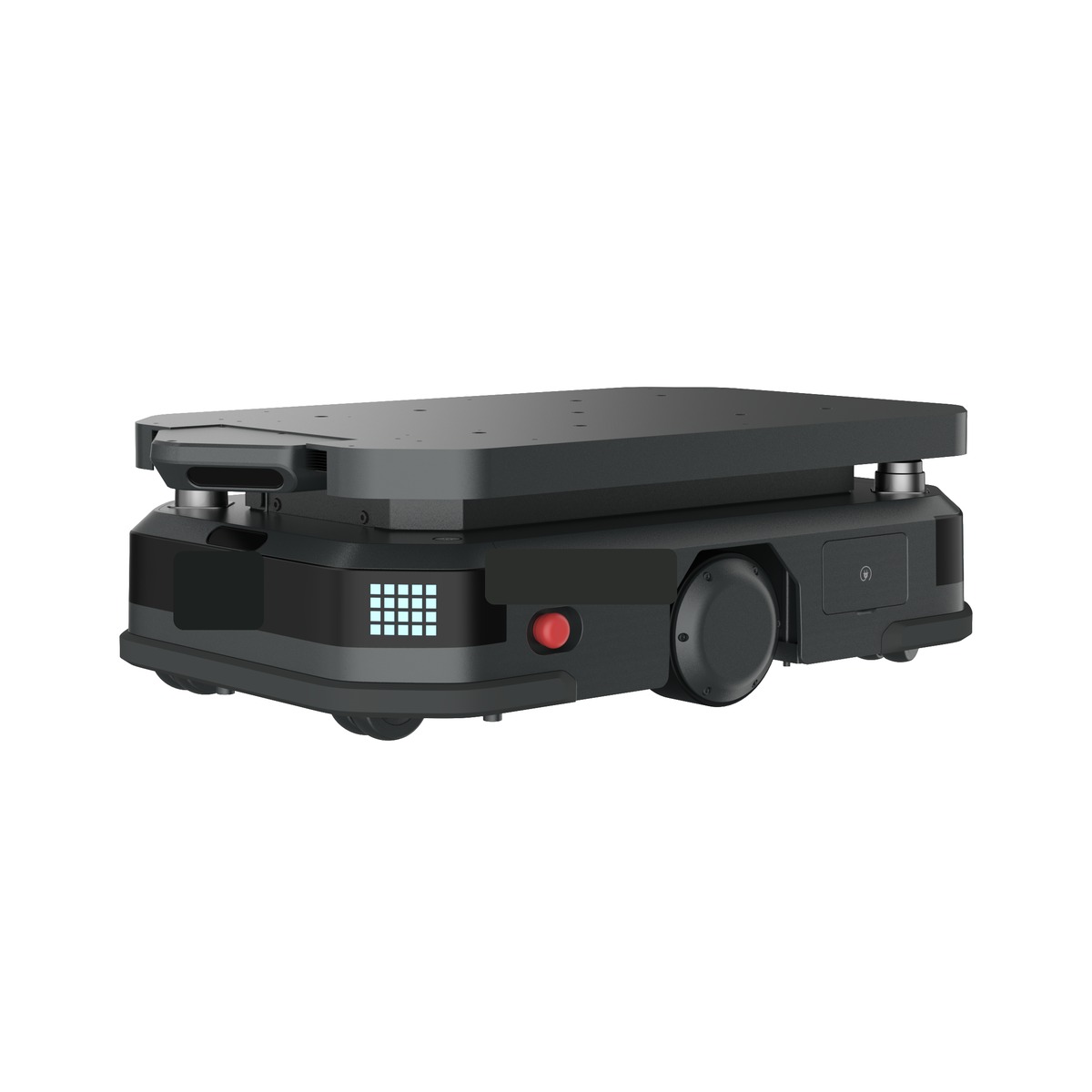
Both AMRs and AGVs are industrial mobile machines. Buyers should ask for a documented risk assessment, specified operating environment, emergency stop behavior, obstacle detection limits, speed limits, stability assumptions, maintenance plan, and staff training procedure. The goal is not to collect logos; it is to understand which hazards were considered and how residual risk is controlled at the actual site.
ISO 3691-4:2023 specifies safety requirements and verification methods for driverless industrial trucks and their systems, including examples such as automated guided vehicles and autonomous mobile robots. For United States projects, buyers should also review ANSI/RIA R15.08 terminology and integration expectations; A3's public mobile robot safety material explains why IMR safety is an application-level responsibility, not just a robot component claim. OSHA's robotics technical manual also defines AGV systems as driverless vehicles following a guide path and records accident patterns that make mixed traffic, detection limits, and maintenance procedures important.
A practical pilot plan for AMR or AGV selection
A pilot should test the actual risk in the site, not just prove that the robot can drive. Choose one representative route with real floor conditions, real loading behavior, real shift traffic, and at least one exception scenario. Measure queue time, blocked-path recovery, docking success, manual intervention rate, battery behavior, operator acceptance, and the number of tasks completed per shift.
For an AMR pilot, include map creation and map-change procedures. Move a pallet, block a lane, change a staging point, and observe whether the robot reroutes safely or creates congestion. For an AGV pilot, test guide-path durability, stop-zone discipline, intersection rules, and the labor needed to modify the route. In both cases, document how the robot behaves when a person steps into the path, a load is poorly placed, a station is occupied, or Wi-Fi is degraded.
The pilot should end with a go/no-go scorecard. If the scorecard only says ?demo successful,? it is not enough. A useful scorecard includes measurable throughput, exception frequency, safety observations, required site changes, integration gaps, training needs, spare-part requirements, and the estimated cost to scale from one route to a fleet.
Supplier questions for an AMR vs AGV quote
Common mistakes when comparing AMR and AGV projects
The first mistake is comparing spec sheets without mapping the route. A payload number, top speed, or battery runtime means little unless it is tied to the actual distance, dwell time, charging window, and station behavior. The second mistake is ignoring human traffic. People, pallet jacks, forklifts, temporary storage, cleaning machines, and maintenance work all change the real operating environment.
The third mistake is treating integration as a later detail. If the robot cannot receive tasks, report exceptions, sequence with conveyors, and recover from failures, it will need manual supervision. The fourth mistake is buying a single demo vehicle without planning fleet rules. Once more robots are added, traffic priority, charging rotation, parking zones, and mission scheduling become central to performance.
The final mistake is asking ?AMR or AGV?? before asking ?what operating discipline can this site actually maintain?? A highly controlled factory may get excellent results from a fixed AGV loop. A warehouse with frequent SKU, rack, and route changes may get better value from AMRs. A hybrid site may use AGV-style fixed transfer in one zone and AMR-style flexible dispatch in another.