Facade Cleaning · High-rise
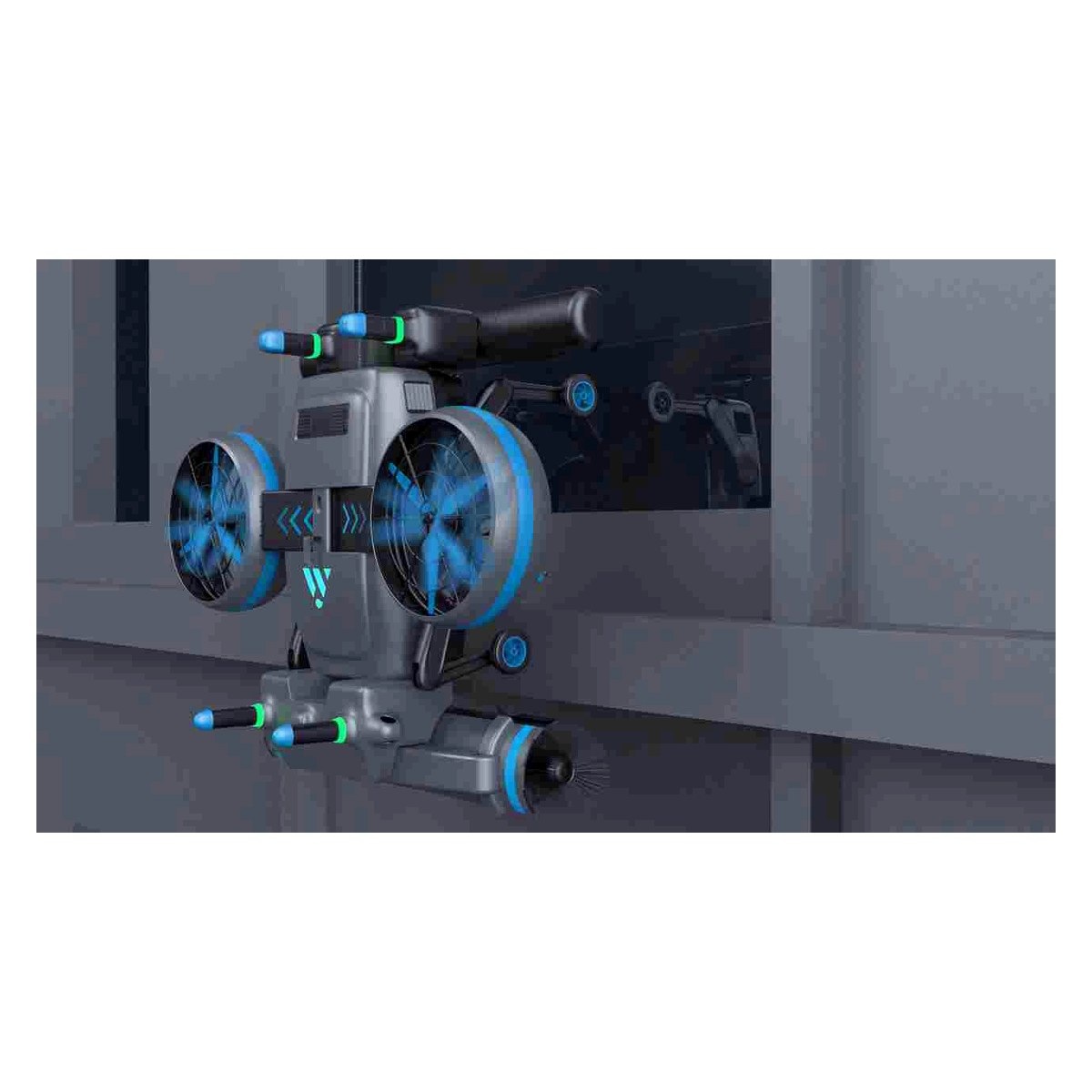
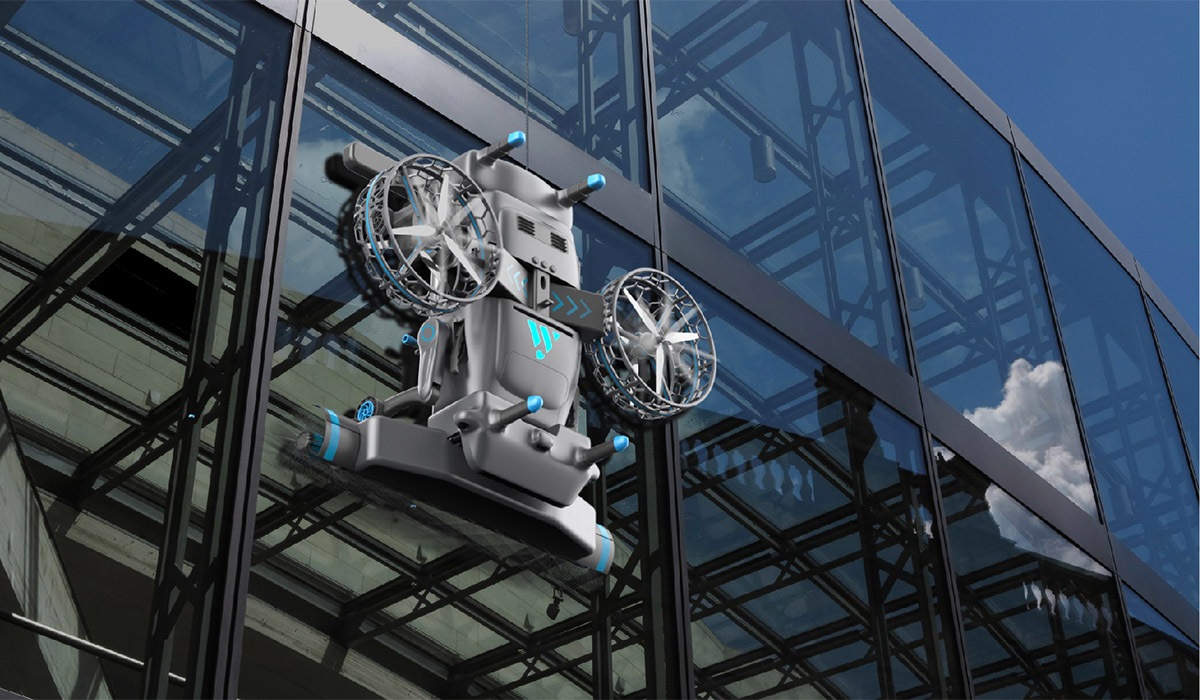
The AFR-1500 is a 50 kg facade cleaning robot for high-rise and super-tall building exteriors. Coaxial twin rotors press it against the facade while a bionic wheel-leg chassis steps over transoms and raised frames up to 220 mm. An oscillating roller brush and a flexible squeegee clean in three modes rated 180, 360 and 500 m²/h, and the rope system locks automatically on power loss. It is rigged from roof anchors and supervised by a trained crew as part of an assessed facade project.
Product views
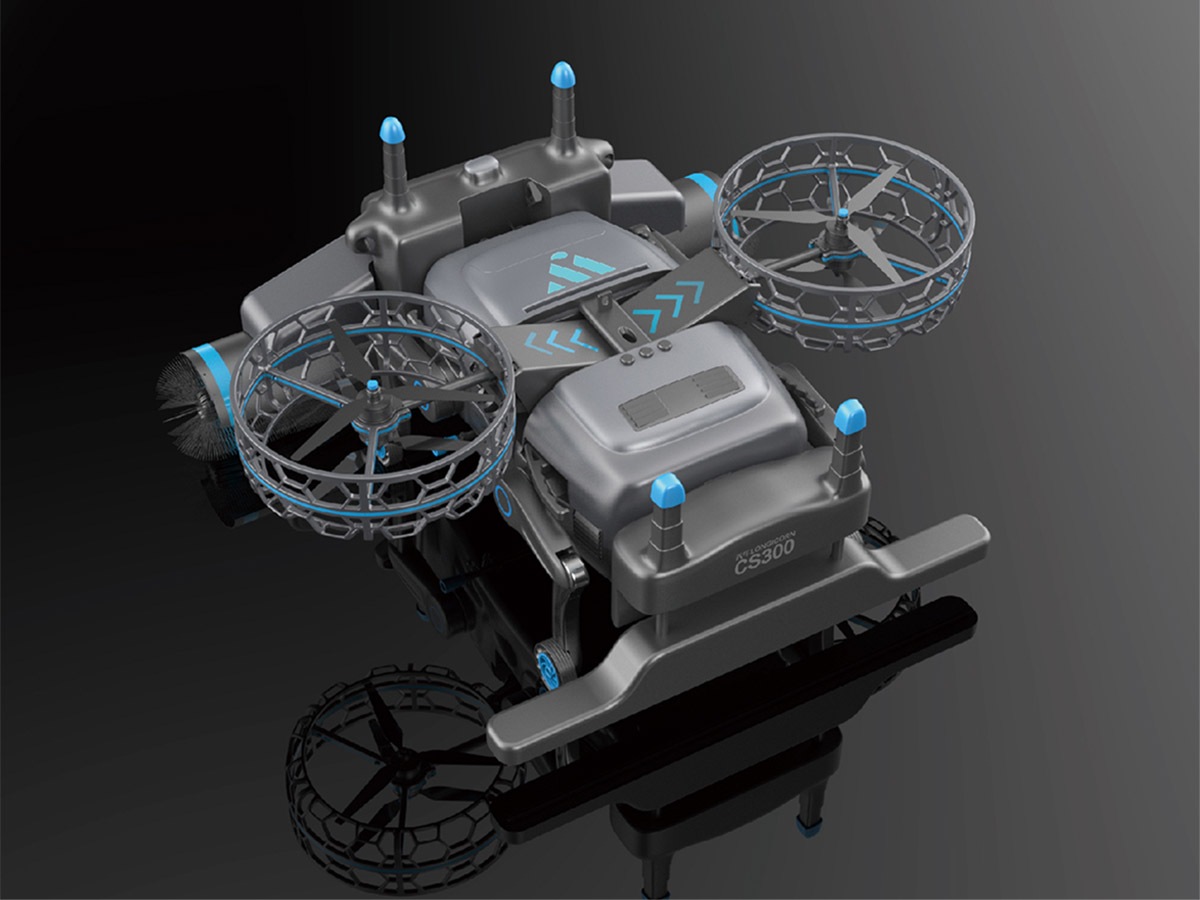
Selected product images from the latest PanPanTech specification pack.


How it works
Most facade robots fail at the first raised frame. The AFR-1500 combines thrust adhesion with a stepping chassis, so it keeps cleaning across transoms instead of stopping at every panel joint.
Coaxial twin rotors generate positive-pressure thrust that holds the robot against glass, stone or metal panels. Contact force is adjusted automatically as surface and wind load change — no suction cups to leak at frame joints.
The chassis lifts and steps over transoms, raised frames and decorative mullions up to 220 mm, which is what allows continuous drops on exposed-frame curtain walls.
A high-frequency oscillating roller brush loosens dirt and a flexible squeegee follows to wipe water off, reducing streaks and water marks. Water is fed from the ground; the project set includes a water purification unit.
Binocular AI perception helps the robot read facade features. The operator supervises from a ground control panel that shows alarms for adhesion, speed, load and attitude.
Safety system
If power is cut, the rope-climbing system locks automatically and the robot holds its position instead of sliding down the rope.
If adhesion force drops, or over-speed, over-load, attitude deviation or a device fault is detected, red alarms flash on the robot body and the ground panel, the robot stops, holds position and engages the self-lock.
Working rope and safety line are rated at 1–2 t by the manufacturer — a wide margin over the 50 kg robot. An independent safety line is available as an option where local rules require redundancy.
The rated wind limit is Beaufort 6, i.e. 10.8–13.8 m/s. The project method statement or local regulations can set a lower stop limit.
Roof & site requirements
Checked during the site survey, before the model is confirmed.
Deployment
Every AFR-1500 project follows the same four stages. The survey decides whether the robot fits — and which areas stay manual.
Facade material (glass, aluminium panel, stone), panel grid, building height, parapet height, roof load capacity, roof obstacles such as fans, lightning protection, pipes and AC units, and work boundaries: floor range, corners, canopies, eaves and protrusions.
Anchor positions and fixing method are fixed, or counterweights / a gondola are specified where the roof has no anchors. The drop sequence and manual-work areas are agreed.
The robot and accessories arrive in two cases (161 kg and 234 kg). Water and power points and permitted working hours are confirmed with the building manager.
Cleaning drops follow the work schedule, manual touch-up areas are recorded, and the equipment is packed and removed.
Operator training is provided at the factory or on site, with remote technical support; on-site service visits are arranged per project. The machine carries a 12-month warranty; full terms are confirmed in the quotation.
Output you can plan with
The 180 / 360 / 500 m²/h ratings are measured on continuous facade under defined test conditions. A real project also spends time on rigging, drop changes, refilling water and crossing obstacles. Manufacturer project records put comprehensive output at 1,500–2,000 m² per robot per day — that is the figure to use for programme length and payback, never the hourly peak. For the wider market picture, see facade cleaning robots: history, market size and ROI.
Manufacturer project records
Client names withheld. Figures as recorded by the manufacturer.
Project footage
Project clips from our manufacturing partner's deployments in the Middle East, South Korea and southern China. A clip shows operation under the filmed conditions; it is not a full-cycle productivity or safety validation.
AFR-1500
Specifications are based on the manufacturer's technical confirmation sheet and written answers to PanPanTech. Rated outputs are obtained under defined test conditions; actual results depend on facade layout, soiling, wind and work organisation. Products are continuously improved and specifications may change without notice. Final configuration is confirmed in the quotation.
AFR-1500 FAQ
Related
Tell us the facade material, raised-frame depth, parapet height, anchor availability, water and power access and project country. We will confirm whether the AFR-1500 fits and how the drops would be planned.