Facade Cleaning · Range & selection
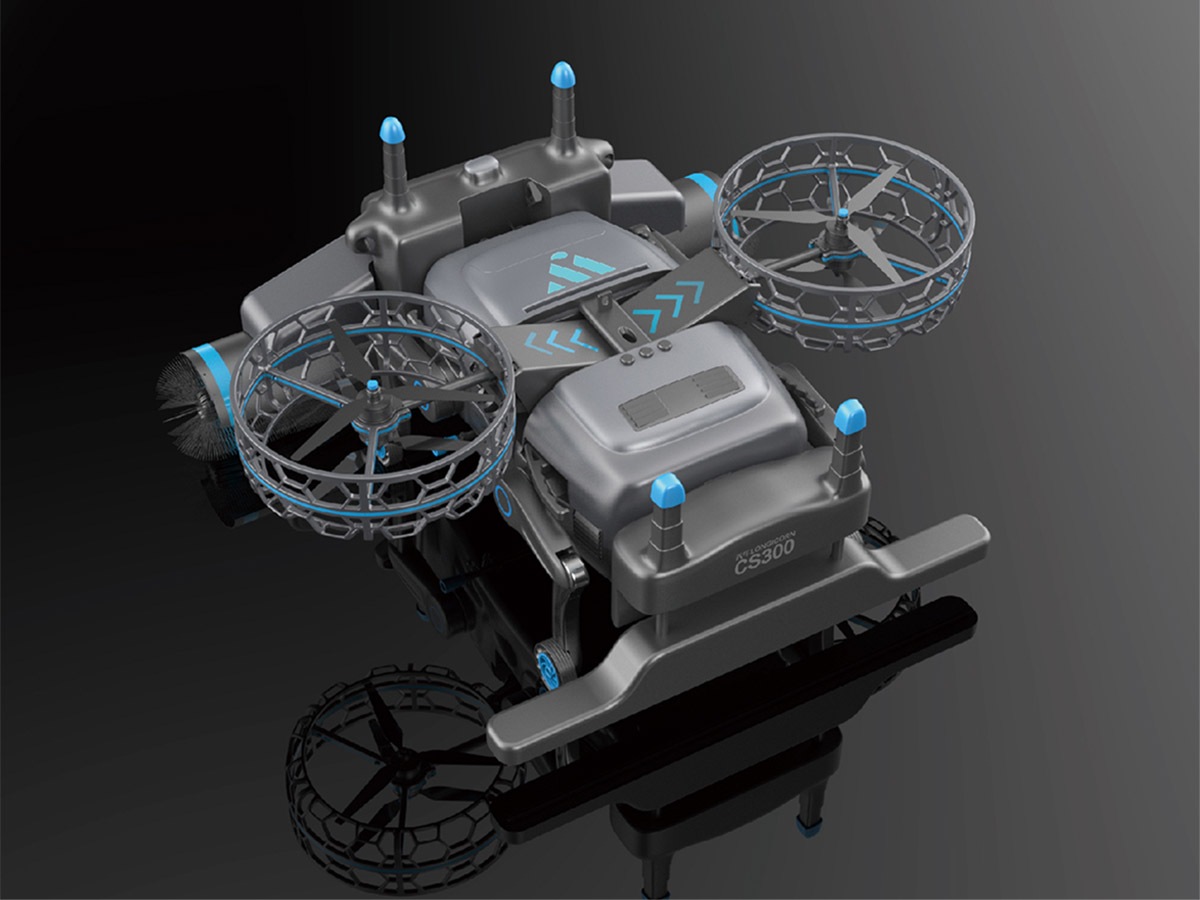
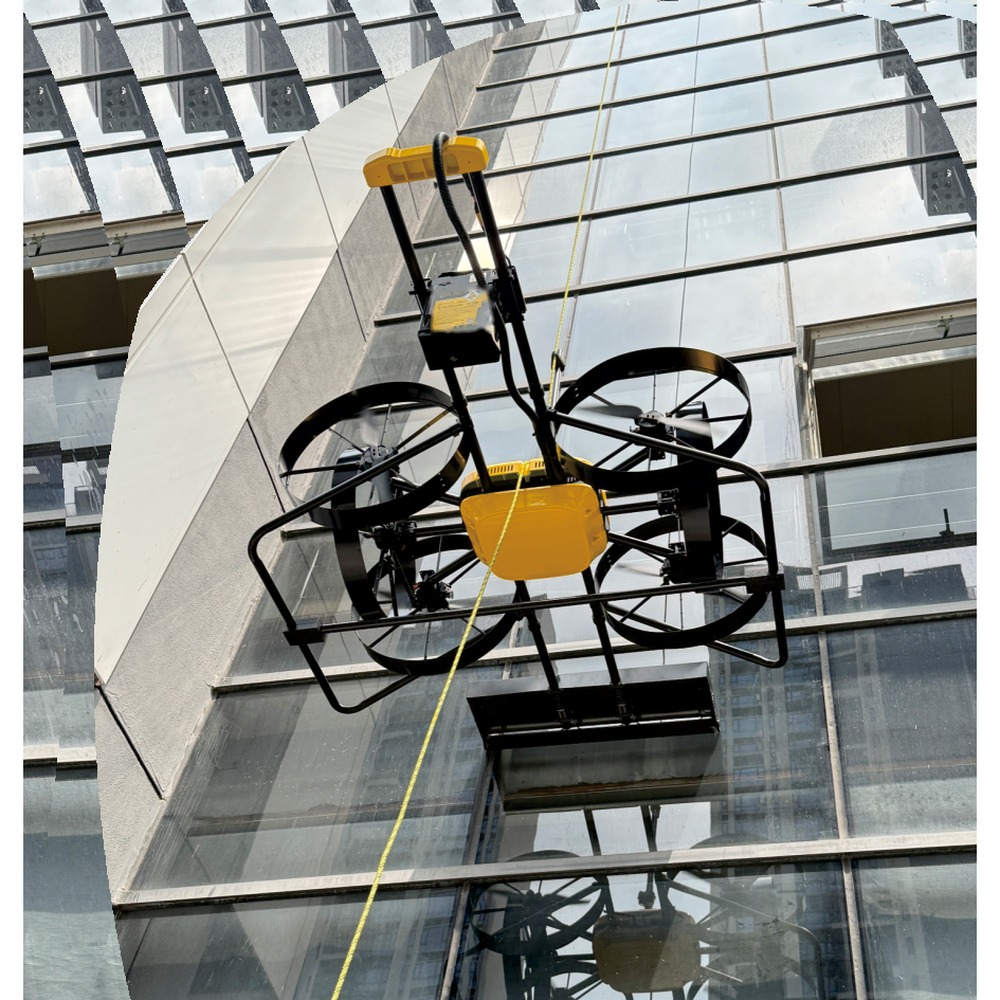
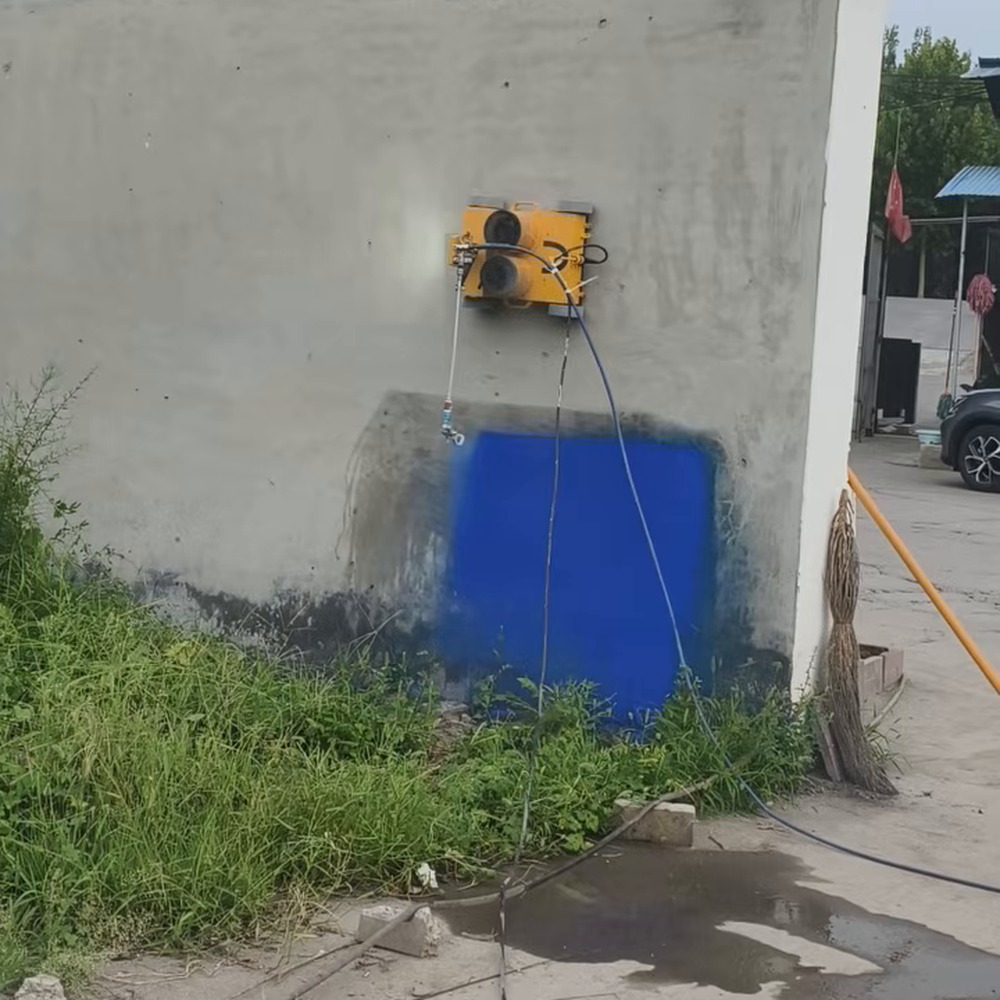
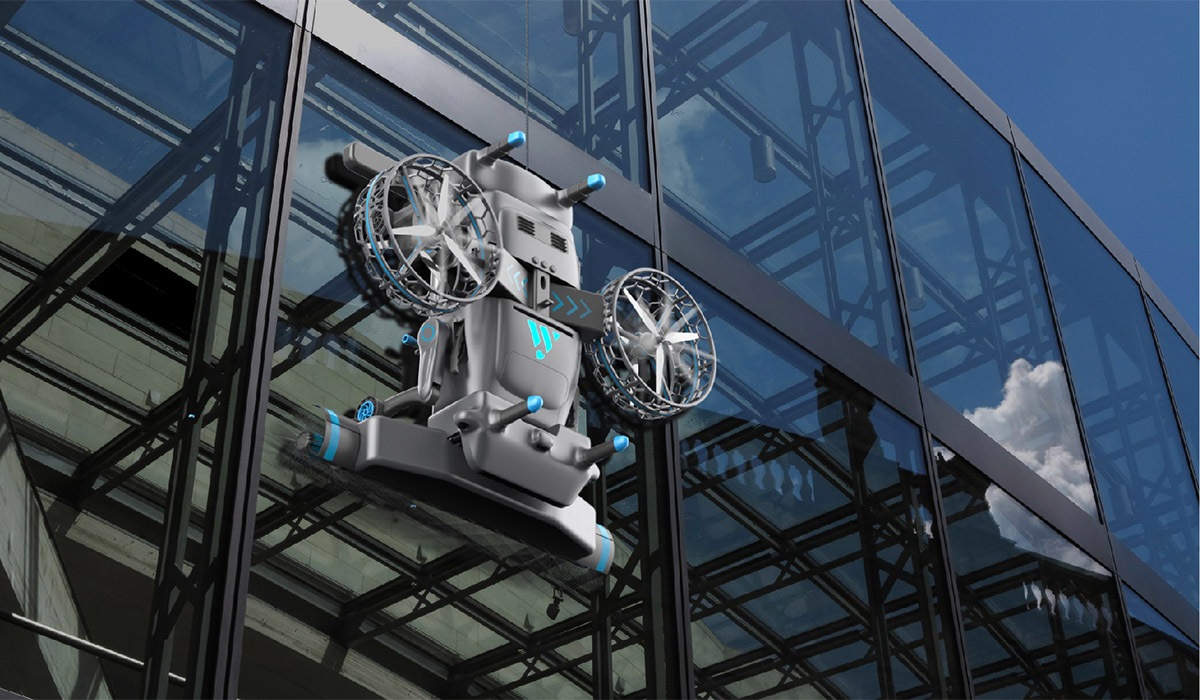
PanPanTech supplies three facade robots for different buildings and jobs: the AFR-1500 for framed high-rise curtain walls up to 300 m, the 22 kg rope-suspended AFR-1200 that a two-person crew carries in a van, and the AFR-0400 for spraying, washing and surface preparation on industrial walls. None of them removes the crew — each is deployed after a building assessment, rigged from the roof and supervised by trained operators. What changes is how much time people spend hanging on ropes.
The range


Side by side
Figures are manufacturer data from each model's specification sheet. Rated outputs are measured in defined test conditions; real output depends on facade layout, soiling and repositioning.
| AFR-1500 | AFR-1200 | AFR-0400 | |
|---|---|---|---|
| Best for | Repeated programmes on high-rise framed curtain walls | Contractors cleaning many buildings; deep fins and frames | Coating, washing and surface prep on industrial structures |
| How it stays on | Roof rope + coaxial twin-rotor thrust | Roof rope + six ducted fans | Dual-duct vacuum + one safety line |
| Weight | 50 kg | approx. 22 kg with battery | 23 kg without tools |
| Cleaning width | 600–1,500 mm | 600–1,200 mm | Tool-dependent |
| Rated output | 180 / 360 / 500 m²/h; 1,500–2,000 m²/day in projects | > 300 m²/h; > 3,000 m²/day | 100–300 m²/h spraying |
| Working height | ≤ 300 m | Set by rope length | Set by safety-line length |
| Obstacle crossing | 220 mm (wheel-leg) | > 1 m | approx. 5 mm |
| Wind limit | Beaufort 6 (10.8–13.8 m/s) | Beaufort 5 | Per site method statement |
| Power | 220 V mains, 0.6 kW | Lithium battery, 2 × approx. 2 h | AC 220 V, 2.5 kW incl. tools |
| Protection | IP54 | Guarded ducts, bumper | IP55 |
| Surfaces | Glass (frameless or framed), stone, metal, composite | Glass, aluminium, metal panel, stone | Concrete, steel, FRP, aluminium |
How to choose
Repeated programmes on towers up to 300 m favour the AFR-1500, whose higher daily output pays back over many cleans. Occasional cleans across many mid-rise buildings favour the lighter AFR-1200.
The AFR-1500 steps over features up to 220 mm. Deeper shading fins and beams — over 1 m — call for the AFR-1200, or for those zones to be planned as manual work.
Glass and panel cleaning: AFR-1500 or AFR-1200. Coating, pressure washing or grinding on concrete, steel or FRP structures: AFR-0400.
Glass-facade robots hang from roof anchors (about 15 kN each recommended for the AFR-1500) or counterweights / a gondola. Parapet height, roof load and rooftop obstacles are checked in the survey.
Check wind and temperature against each model's limits: Beaufort 6 for the AFR-1500, Beaufort 5 and 0–30 °C for the AFR-1200, 0–55 °C for the AFR-0400.
Send us these for an assessment
With this information we can confirm the model, the drop plan and which areas stay manual.
Methods compared
A facade robot is not a better rope technician — it is a different way of organising the job. This is where each method stands.
| Rope access | Gondola / BMU | Facade robot | |
|---|---|---|---|
| People on the facade | Throughout the job | In the cradle throughout the job | Rigging and supervision only; robot does the panel work |
| Setup | Fast, light kit | Needs a gondola, BMU or temporary rig | Roof anchors or counterweights, robot rig |
| Raised frames & fins | Handled by hand | Limited by cradle clearance | Model-dependent: 220 mm to over 1 m |
| Consistency | Depends on the individual | Depends on the individual | Same brush, pressure and speed every drop |
| Weather sensitivity | High | High | High — each model has a rated wind limit |
| Still needed for | — | — | Corners, signage, recesses, inspection, touch-up |
Deployment
The same four stages apply to every glass-facade project. Details for each model are on its product page.
Facade material and panel grid, building height, parapet and roof load, rooftop obstacles, and work boundaries such as canopies, eaves and protrusions.
Anchor positions or counterweight / gondola deployment, drop sequence, wind stop limit and manual-work areas.
Equipment delivery, water and power points, permitted working hours and exclusion zones at ground level.
Cleaning drops to schedule, manual touch-up of recorded areas, demobilisation and a record of what was cleaned.
Project footage
Project clips from our manufacturing partner's deployments, plus one manual rope-access reference for comparison. Clips show operation under the filmed conditions only.
Facade robot FAQ
Further reading
We will review the facade material, frame depth, roof anchors, water and power access and local rules, then recommend a model and a pilot area.